Imagine a world where digital characters are indistinguishable from real people, where your online persona moves with uncanny realism, or where fantastical creatures spring to life with breathtaking detail. This isn't just science fiction; it's the current frontier of digital avatar creation, powered by an intricate tapestry of visual effects (VFX). Understanding the Types of Visual Effects for Digital Avatars isn't just for VFX artists; it's crucial for anyone looking to truly unlock the potential of virtual identities, immersive experiences, and next-gen storytelling.
Whether you're building a character for a blockbuster movie, a game, a metaverse experience, or even your own digital double, the right VFX techniques transform static models into living, breathing entities. It’s about more than just making things look pretty; it's about evoking emotion, conveying personality, and creating a believable presence in an increasingly digital world.
At a Glance: Key Takeaways
- Digital avatars rely almost entirely on Computer-Generated Imagery (CGI), a subset of VFX, unlike traditional film which blends practical and digital effects.
- VFX for avatars covers everything from their initial 3D modeling and texturing to their animation, dynamic movements, and seamless integration into digital or live-action scenes.
- Motion capture and dynamics simulation are crucial for realistic avatar movement, clothing, and hair.
- Advanced techniques like digital doubles, hair/fur simulation, and crowd simulation push the boundaries of avatar realism and scalability.
- Modern trends like virtual production, AI/Machine Learning, and photorealism are rapidly transforming how avatars are created and used.
- Effective avatar VFX demands meticulous planning, strong collaboration, and a clear understanding of both creative vision and technical limitations.
What Exactly Are Visual Effects, Anyway?
Before we dive into the specifics of avatars, let's briefly ground ourselves in the broader world of visual effects. In essence, VFX encompasses any technique used to create imagery that can't be captured directly during a live shoot. Think of it as cinematic magic, enhancing visual storytelling by creating and manipulating realistic or fantastical images and scenes. These techniques are the unsung heroes of film, television, and video games, enabling the depiction of impossible scenarios and bringing wildest imaginations to life.
Historically, VFX leaned heavily on "practical effects" – physical elements built on set, like animatronics, miniatures, or elaborate makeup. While still valuable for specific applications, the game truly changed with the advent of "digital effects," or Computer-Generated Imagery (CGI), in the 1990s. CGI shifted the paradigm, allowing artists to design and manipulate environments, characters, and objects entirely in the digital realm, offering unparalleled flexibility and realism. Today, over 70% of blockbuster film VFX are digital, and for avatars, that number is even higher – virtually 100%.
The third pillar of VFX is "compositing," the indispensable process of seamlessly blending multiple visual elements – be it live-action footage, CGI, or even painted backdrops – into a single, cohesive image. It's where all the disparate pieces come together to form a believable reality.
Now, let's narrow our focus to where this magic truly shines for digital beings.
Crafting the Digital Self: Foundational VFX for Avatars
Creating a digital avatar isn't just about sculpting a pretty face; it's a multi-layered process that demands a deep understanding of several core VFX disciplines. These techniques form the bedrock upon which any believable digital persona is built.
1. 3D Modeling and Animation: The Avatar's Genesis
Every digital avatar begins as a 3D model. This is the art of creating three-dimensional representations of objects, characters, and environments using specialized software.
- Modeling: This involves sculpting the avatar's form, defining its geometry through polygons, and giving it shape. From a stylized cartoon character to a hyper-realistic human double, the modeling phase dictates the avatar's fundamental appearance.
- Texturing: Once modeled, the avatar needs skin, clothes, and other surface details. Texturing applies images, patterns, and material properties (like shininess, roughness, or translucency) to the 3D model, giving it visual fidelity and realism. A well-textured avatar feels tangible, not just like a bland grey shape.
- Rigging: To move, an avatar needs a skeleton. Rigging is the process of building a digital "armature" (a set of bones and joints) inside the 3D model. This rig allows animators to manipulate the avatar's pose and movement, much like a puppeteer controls a marionette. Without a good rig, animation is clunky and unrealistic.
- Keyframing & Animation: With a rigged model, animators use keyframing to define the avatar's movements over time. They set specific poses at different points (keyframes), and the software interpolates the motion in between, creating smooth, fluid animation. This can range from simple gestures to complex action sequences.
2. Digital Doubles: The Ultimate Replica
For the pinnacle of photorealistic avatars, especially those meant to stand in for real actors or historical figures, "digital doubles" are the gold standard. These are incredibly precise, computer-generated replicas of real-world objects or human actors. Creating a digital double involves extensive 3D scanning (capturing every nuance of an actor's face and body), meticulous modeling, and advanced texturing. They are often combined with sophisticated the fundamentals of motion capture to translate an actor's actual performance directly onto their digital counterpart, allowing for seamless integration into scenes or even entire performances. This technique is invaluable for complex stunts, difficult environmental shots, or when an actor needs to portray multiple versions of themselves.
Bringing Avatars to Life: Movement and Interaction
A static avatar is just a sculpture. The real magic happens when it moves, interacts with its environment, and expresses itself. These VFX techniques are critical for animating avatars with believable and engaging performances.
1. Motion Capture: Harvesting Reality
Often abbreviated as "mo-cap," motion capture is a game-changer for avatar animation. It involves recording the real-life movements of actors or objects and translating that data into digital information for 3D characters. Actors wear specialized suits with markers, which are tracked by cameras or sensors. This data is then applied directly to the avatar's rig, allowing for incredibly realistic and nuanced animation that mirrors human performance. Mo-cap is fundamental for lifelike character animations in games, films, and virtual experiences, greatly reducing the time and cost associated with manual keyframe animation while significantly boosting realism.
2. Dynamics Simulation: Physics in the Digital World
Real-world objects adhere to physics – gravity, wind, collisions, fluid dynamics. For avatars to feel truly present, their clothing, hair, and accessories must also behave realistically. "Dynamics simulation" uses computer physics engines to mimic these behaviors.
- Cloth Simulation: This is crucial for realistic clothing. It calculates how fabric drapes, wrinkles, and moves in response to an avatar's motion and external forces like wind.
- Hair/Fur Simulation: Realistically recreating the appearance and movement of hair or fur on digital characters is incredibly complex. Simulators calculate the interaction of thousands, even millions, of individual strands, ensuring they sway, bounce, and react naturally to movement and environment.
- Rigid Body & Soft Body Dynamics: For items like armor, jewelry, or even an avatar's own fleshy parts, these simulations determine how they react to impacts, forces, and deformation.
Without robust dynamics simulation, even the most beautifully modeled and animated avatar can fall flat, revealing its digital nature through stiff clothing or unnatural hair movement.
3. Crowd Simulation: Populating Virtual Worlds
When your avatar isn't alone, "crowd simulation" comes into play. This technique generates realistic animations for large groups of people or creatures, often used to populate sprawling digital environments. Instead of animating each individual character, crowd simulation software uses pre-animated cycles, AI behaviors, and pathfinding algorithms to create the illusion of a bustling crowd, all reacting independently yet cohesively. This is vital for scenes requiring large-scale interaction, from battle sequences to lively cityscapes, adding immense scale and immersion to avatar-centric experiences.
Integrating Avatars: Blending into Any Scene
Once an avatar is modeled, textured, and animated, the next challenge is placing it seamlessly into its intended environment, whether that's a purely digital world or a live-action shot. This is where compositing and integration VFX shine.
1. Chroma Keying (Green/Blue Screening): The Magical Canvas
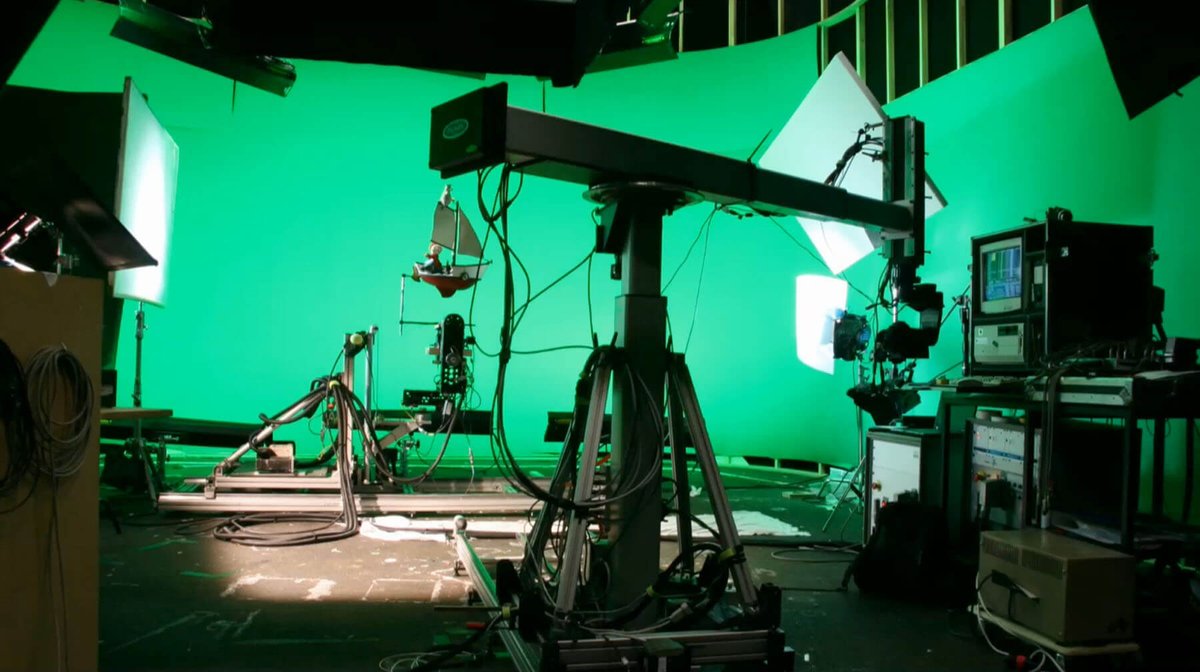
One of the most recognizable VFX techniques, "Chroma Keying" (or green/blue screening), is fundamental for integrating avatars into real-world footage. By shooting live-action elements (or even a live actor as an avatar) against a solid, brightly colored background (usually green or blue), artists can digitally "key out" that color and replace it with any other image or video. This allows an avatar, whether fully CGI or a human performer augmented with digital elements, to appear in any location imaginable without ever physically being there.
2. Match Moving: Sticking Avatars to Reality
To ensure that a digital avatar sits perfectly within a live-action plate, "Match Moving" is essential. This technique tracks the precise camera motion or object movements in a live-action shot. The extracted motion data is then applied to the virtual camera or 3D elements in the CGI software. This ensures that the digital avatar's perspective and movement match that of the live-action footage, eliminating any "slipping" or visual disconnect and making the integration truly seamless. It's the silent hero that makes CGI look real.
3. Compositing: The Final Blend
As mentioned earlier, "Compositing Effects" are the final stage of integration. This is the process of combining all the different visual elements – the live-action background, the rendered digital avatar, matte paintings, particle effects, and more – into a single, cohesive image. It involves meticulous layering, adjusting colors, lighting, shadows, and other properties to ensure that the avatar looks like it belongs in the scene. Tools like Adobe After Effects or Nuke are the digital canvases for this sophisticated blending. The art of compositing is what brings everything together, creating the final illusion.
4. Matte Painting: Expansive Worlds for Avatars
Even in a world of 3D, "Matte Painting" remains a powerful tool, particularly for creating expansive backdrops or environments for avatars to inhabit. These are highly detailed digital (or traditionally painted) environments that are combined with photography and live-action footage. For an avatar, a matte painting can provide an impossibly grand vista, a distant cityscape, or an alien landscape, adding tremendous scope to the scene without the need for extensive 3D builds or location shooting.
Advanced Embellishments and Specialized Avatar Effects
Beyond the core creation and animation, a host of other VFX techniques can enhance an avatar's presence, add flair, or serve specific narrative functions.
1. Particle Effects: Adding Dynamic Flourishes
"Particle effects" are used to generate dynamic visual elements like smoke, fire, explosions, water splashes, magic auras, or even swarms of insects. For avatars, these effects can add incredible personality and context. Imagine an avatar with a fiery breath, shimmering magical energy, or simply dust kicking up from its feet – these are all achieved through designing and programming particles that behave according to defined rules, making the avatar's actions more impactful and visually striking.
2. Paint and Wire Removal: Digital Cleanup Crew
Even with the most careful planning, sometimes unwanted elements appear in a shot – a safety wire used for an actor, a tracking marker that wasn't supposed to be visible, or even a scratch on a prop. "Paint and Wire Removal" involves digitally erasing these distractions from the footage. For avatars, this might mean cleaning up any residual tracking markers from motion capture, removing rigs used to hold props, or refining any visual glitches, ensuring a pristine final image.
3. Rotoscoping: Isolating and Enhancing
"Rotoscoping" is the painstaking process of tracing over live-action film footage frame by frame to isolate elements. While often used to create animated sequences, for avatars, it can be crucial for creating complex masks to separate a live actor from a background, allowing a digital avatar to interact behind them, or for applying subtle digital enhancements (like glowing eyes or energy effects) to specific parts of a live-action avatar performance.
The Evolving Landscape: Modern Trends in Avatar VFX
The world of VFX is in constant motion, driven by technological breakthroughs. Several key trends are particularly impactful for how digital avatars are conceived, created, and deployed.
1. Virtual Production: Avatars on Set, in Real-Time
"Virtual production" is revolutionizing filmmaking and avatar creation by combining live-action footage with real-time CGI. Using massive LED walls displaying virtual environments, actors can perform directly within the digital world, and digital avatars can be composited into the scene as it's being shot. This allows for immediate feedback on lighting and composition, dramatically improving efficiency and creative collaboration. For avatars, this means artists can see their digital characters interacting with live actors and environments in real-time, greatly streamlining the integration process and unlocking new creative possibilities for immersive storytelling. Virtual production is truly changing the game.
2. AI and Machine Learning: The Smart Avatar Revolution
Artificial Intelligence (AI) and Machine Learning (ML) are increasingly permeating VFX workflows, bringing unprecedented levels of automation and realism.
- Automated Tasks: AI can automate tedious tasks like rotoscoping, paint removal, and even basic compositing, freeing up artists for more creative work.
- Realistic Animation: AI can analyze vast amounts of real-world footage to generate more realistic avatar animations, predict natural movements, or even generate expressive facial animations based on audio input.
- Digital Human Creation: AI-driven tools are emerging that can generate highly convincing digital humans and avatars from simple photographs or even text prompts, accelerating the initial modeling and texturing phases.
- Performance Enhancement: AI can interpret nuanced facial expressions or body language from motion capture data, enhancing them for greater emotional impact on the avatar.
A 2021 Visual Effects Society report indicated that AI tools increased productivity by up to 30%, highlighting AI's role in VFX workflows as a major force.
3. Photorealism and the Uncanny Valley
The relentless pursuit of "photorealism" continues to drive advancements in rendering technologies. For avatars, this means ever more intricate skin shaders, realistic eye models, and micro-details that make digital characters truly indistinguishable from their human counterparts. The challenge, however, is the "uncanny valley" – the psychological phenomenon where nearly-human figures provoke a sense of revulsion rather than empathy. Overcoming this requires not just technical prowess but also a deep understanding of human perception and subtle behavioral cues, ensuring avatars are not just realistic, but also emotionally resonant.
4. VR and AR: Immersive Avatar Experiences
Virtual Reality (VR) and Augmented Reality (AR) are expanding the possibilities for immersive experiences and, consequently, the role of digital avatars. Avatars in VR can represent users in fully virtual worlds, while AR overlays digital avatars onto the real world. These technologies enable new forms of pre-visualization (seeing how an avatar will look in a virtual space before it's fully rendered), on-set visual cues for actors interacting with virtual characters, and interactive experiences where users' own avatars are central to the narrative.
The Art of Integration: Best Practices for Avatar VFX
Creating compelling digital avatars isn't just about knowing the techniques; it's about smart execution. Here are some best practices for leveraging VFX effectively in avatar projects.
- Prioritize Planning and Pre-visualization: The most successful VFX projects begin long before shooting or 3D modeling. Storyboarding, animatics (animated storyboards), and pre-visualization (rough CGI mock-ups) help define the avatar's look, movement, and interaction within the scene. This proactive approach catches potential issues early, saving immense time and money down the line.
- Collaborate Closely with VFX Artists from the Outset: Don't treat VFX as a post-production afterthought. Involve your VFX team, especially those specializing in character and creature design, from the very beginning of your project. Their insights on technical feasibility, creative solutions, and budget implications are invaluable.
- Maintain Consistency in Visual Style: Whether aiming for photorealism or a stylized aesthetic, ensure that your avatar's visual style is consistent across all elements – modeling, texturing, animation, and integration. Inconsistencies can break immersion and reveal the digital nature of the character.
- Understand Technology Limitations: While VFX can achieve almost anything, every technique has its practical limits in terms of realism, time, and budget. Knowing what's genuinely achievable and what requires pushing boundaries (and budgets) helps manage expectations and make informed creative decisions.
- Test, Test, Test: Don't wait until the final render to see if an avatar's hair simulation works or if its integration into a scene is seamless. Implement rigorous testing throughout pre-production and production. Early feedback on animation cycles, lighting passes, and compositing tests can prevent costly rework.
- Allocate Sufficient Budget and Time: Quality VFX, especially for complex digital avatars, is expensive and time-consuming. Skimping on either will inevitably compromise the final result. A realistic budget and timeline are critical for achieving high-quality, believable avatars.
- Focus on Performance, Not Just Looks: A stunningly rendered avatar will fall flat if its performance is wooden. Invest in good motion capture, skilled animators, and expressive rigging to give your avatar a convincing personality and emotional range. This is where visual storytelling techniques truly connect with the audience.
Navigating the Challenges and Ethical Landscape
The journey of creating advanced digital avatars isn't without its hurdles, and increasingly, ethical considerations are coming to the forefront.
Key Challenges:
- Rapid Technological Evolution: The pace of innovation in VFX means tools and techniques are constantly evolving, requiring artists and studios to adapt quickly and continuously upskill.
- Increasing Demand for Quality: Audiences, accustomed to blockbuster visuals, have ever-higher expectations for realism and immersion, putting pressure on VFX teams to deliver exceptional results.
- Talent Shortage: There's a persistent shortage of highly skilled VFX artists, especially those proficient in complex avatar-specific techniques like character rigging, advanced simulation, and photorealistic rendering.
- Budget Constraints: Despite the demand for high quality, budgets for VFX often remain tight. A study found that 70% of VFX professionals reported budget limitations directly affecting work quality, underscoring the delicate balance between ambition and resources.
Ethical Considerations:
- Authenticity and Misleading Viewers: With the rise of deepfakes and highly realistic digital doubles, there's a growing concern about ensuring authenticity and preventing the creation of misleading imagery. Disclosing when avatars are used for specific purposes (e.g., historical reenactment vs. fake news) is paramount.
- Responsible Representation: Avatars reflect the diversity of humanity (or lack thereof). VFX artists and creators have an ethical responsibility to avoid perpetuating stereotypes, promote inclusive representation, and ensure avatars are designed respectfully and thoughtfully.
- Sustainability: The rendering farms and powerful hardware required for complex avatar VFX consume significant energy. The industry is increasingly focusing on eco-friendly production practices, optimizing rendering processes, and exploring greener technologies to minimize environmental impact.
- Data Privacy (Motion Capture): When using motion capture from real individuals, questions of data ownership, privacy, and consent for the digital representation of their performance become critical.
The Avatar Renaissance: Your Next Steps
The realm of digital avatars is exploding, fueled by advancements in visual effects that make the once-impossible a daily reality. From populating virtual worlds to creating hyper-realistic digital doubles for film, the techniques we've explored empower creators to bring any vision to life. The convergence of traditional VFX artistry with cutting-edge technologies like AI and virtual production promises an even more exciting future for digital beings.
If you're looking to dive deeper into this fascinating field, whether as a creator, a consumer of digital experiences, or simply an enthusiast, remember that the core principles remain. Understanding the fundamentals of 3D modeling, the nuances of motion capture, and the art of seamless integration is your key to unlocking truly immersive and believable digital worlds. The ongoing evolution of the future of digital humans hinges on these very techniques.
The next time you encounter a breathtaking digital character, take a moment to appreciate the intricate dance of visual effects that brought it to life. It's not just a character on screen; it's a testament to human ingenuity, pushing the boundaries of what's possible, one pixel, one frame, one dynamic simulation at a time. To truly master the art of bringing digital personas to life, you'll need a comprehensive grasp of these tools and techniques. Learn more about Avatar FX and start shaping the digital future today.