The digital frontier is expanding at an unprecedented rate, and with it, the demand for authentic, expressive digital identities. From hyper-realistic game characters that blur the line with reality to engaging virtual companions and brand ambassadors, the right Avatar Creation Software & Tools for Effects are no longer a luxury but a fundamental requirement for anyone looking to make a meaningful mark online. These powerful platforms allow creators to breathe life into digital personas, transforming static models into dynamic, interactive entities that resonate across virtual worlds and real-time applications.
At a Glance: Crafting Your Digital Double
- Lifelike avatars are crucial for establishing a compelling digital presence in an increasingly virtual world.
- A spectrum of tools exists, from free, user-friendly options like Bitmoji to professional-grade powerhouses such as Reallusion Character Creator and Blender.
- Artificial Intelligence (AI) is a game-changer, evolving static avatar models into intelligent, interactive personas capable of real-time conversation and emotional responses.
- Deep customization is key to realism, encompassing everything from intricate facial features and body morphs to dynamic hairstyles, detailed wardrobe, and nuanced expressions.
- Professional software offers robust features like automated rigging, advanced animation capabilities, and seamless integration with leading 3D platforms and game engines.
- Reallusion Character Creator 5 (CC5) stands out as a leading solution for developing high-definition, production-ready characters suitable for both gaming and film-quality projects.
The Pulse of Digital Identity: Why Lifelike Avatars Matter
In our increasingly interconnected digital landscape, a realistic avatar isn't just a profile picture; it's a virtual extension of self, a brand identity, or a dynamic interface. Think about the rich, immersive experiences we crave in modern gaming, where character realism directly impacts emotional connection and believability. Consider the burgeoning metaverse, where your avatar will be your primary representation, navigating social spaces, conducting business, and forming relationships.
Beyond entertainment, lifelike avatars are revolutionizing customer service through intelligent bots, enhancing virtual companionship with empathetic AI, and empowering creators to tell stories with unparalleled visual fidelity. The ability to craft a digital counterpart that looks, moves, and even converses like a human being unlocks a new era of engagement and interaction, making digital experiences feel more intuitive and profoundly personal.
Navigating the Landscape of Avatar Creation Tools
The sheer variety of avatar creation software can be daunting. From quick, browser-based solutions to comprehensive professional suites, each tool offers a unique balance of accessibility, power, and specialization. Understanding their strengths is key to choosing the right path for your digital journey.
Easy Entry Points for Realistic Avatars
Not every project demands a Hollywood-level budget or a team of 3D artists. For those seeking accessible, often free, ways to create realistic digital personas, several platforms offer intuitive interfaces and impressive results.
- Bitmoji: This popular app excels at quick, personalized full-body avatars. Utilizing an augmented reality camera, Bitmoji allows users to generate surprisingly accurate digital representations without needing any prior design skills. It’s perfect for casual social media integration and personal expression.
- Face Avatar Maker Creator: Another free option, this tool focuses on delivering realistic character faces with a good degree of customization. It’s ideal for quickly visualizing a character's headshot or a profile picture with a lifelike aesthetic.
- VRoid Studio: While often associated with anime-style characters, VRoid Studio offers a robust platform for creating and customizing 3D models. With a bit of artistic tweaking and careful material choices, users can push its capabilities towards more realistic, human-like figures, making it a powerful free alternative for those willing to experiment.
- Media.io 3D Avatar Creator: This online tool provides a straightforward way to generate 3D avatars, often with a focus on ease of use. It’s a great starting point for individuals who want a quick 3D model without diving into complex software.
- (A note on stylized tools: While popular platforms like Marvel's Create Your Own Superhero or the South Park Avatar Creator offer immense fun and personalization, their highly stylized nature places them outside the realm of realistic avatar creation, which is our focus here.)
Unlocking Professional-Grade Digital Characters
When your vision demands unparalleled realism, intricate detail, and seamless integration into professional pipelines, you'll need to turn to the heavy hitters. These tools provide the depth and control required for gaming, animation, film, and high-fidelity metaverse projects.
Blender: The Open-Source Powerhouse
Blender stands as a testament to the power of open-source software. This incredibly versatile 3D creation suite offers extensive capabilities for modeling, sculpting, texturing, rigging, animation, and rendering. For realistic avatar creation, Blender provides a full toolkit to sculpt every pore, weave every strand of hair, and precisely rig a character for fluid motion. Its steep learning curve is offset by an active community, countless tutorials, and zero licensing costs, making it a favorite for independent artists and studios alike.
Daz Studio: Ready-Made Realism
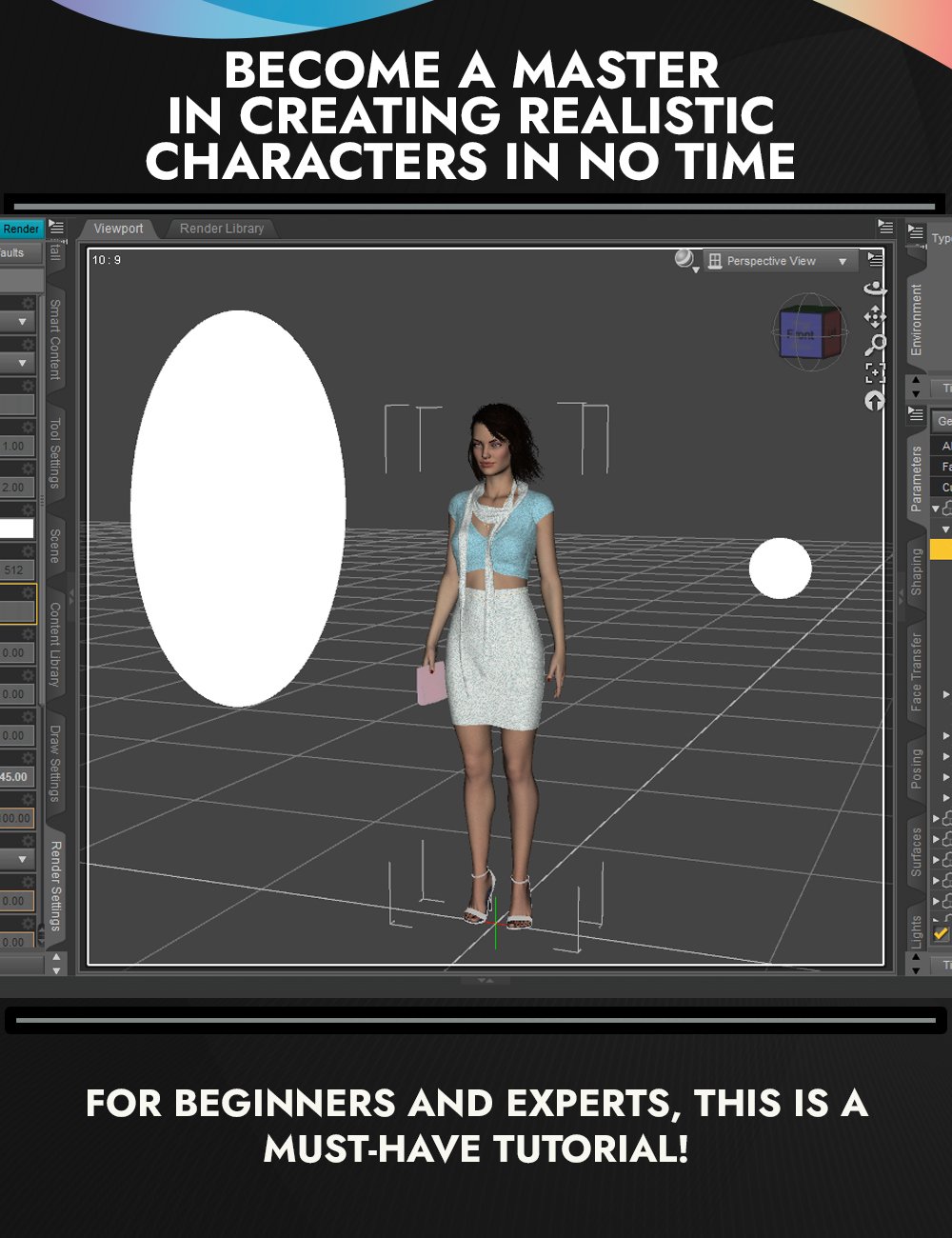
Daz Studio is a free-to-download 3D figure posing and animation software that comes with a robust library of highly detailed 3D assets. While not a modeling tool in the traditional sense, it allows users to customize, pose, and render incredibly realistic human figures and creatures. Its strength lies in its ecosystem of purchasable content, allowing creators to quickly assemble and adapt professional-grade characters with a focus on rendering photorealistic scenes.
Adobe Character Animator: Performance-Driven Personalities
Adobe Character Animator offers a unique approach, focusing on real-time performance capture to animate 2D characters. While primarily for 2D, its ability to translate webcam and microphone input into immediate character animation makes it a fascinating tool for adding expressive effects to digital personas, especially for live streaming or quick animated shorts.
Reallusion Character Creator (CC): The Comprehensive Ecosystem
For a holistic solution covering the entire 3D character pipeline, Reallusion's Character Creator (CC) is a standout. It's designed to help designers generate, import, and customize both stylized and highly realistic 3D characters, ready for integration into a wide array of 3D tools including iClone, Maya, Blender, Unreal Engine, and Unity.
CC streamlines complex processes such as:
- 3D Character Generation: Quickly create diverse characters from scratch, using templates, or even from photographs.
- Animation Rigging: Automated and precise rigging for any humanoid character, handling complex multi-mesh models and hard surfaces with ease. It features AccuRIG integration for efficient skin weight adjustments and customizable skeleton layouts.
- Asset Management: A smart content system allows for efficient organization and application of vast libraries of morphs, clothing, textures, and accessories.
- Look-Dev & Rendering: Tools for defining skin tones, creating lifelike hair, and dressing characters with high-fidelity materials, all viewable with real-time PBR rendering.
- Interactive Design: Adjust character shapes, define unique skin textures, change hairstyles, and apply dynamic clothing to create truly unique digital individuals.
Crucially, CC supports importing and facial rigging any rigged biped models (humans, creatures, props), making them compatible with thousands of motion assets for natural lip-sync, motion capture, and iClone animation controls. Characters can be optimized for low-poly, high-performance crowd simulation, AR, VR, and metaverse projects.
Its integration capabilities are extensive, featuring free add-ons like GoZ for ZBrush, CC Tools for Blender, CC AutoSetup for Unreal Engine and Unity Mecanim, UDIM support for Substance Painter and Marvelous Designer, and auto render setups for Marmoset Toolbag, Autodesk Maya, 3ds Max, and NVIDIA Omniverse (via USD workflow). Reallusion AI Smart Search provides easy access to content from the Content Store, Marketplace, and ActorCore, further enhancing your creative possibilities.
Reallusion Character Creator 5 (CC5): Pushing the Boundaries of Realism
The latest iteration, Character Creator 5 (CC5), represents a major leap forward for HD character creation, introducing a powerful subdivision workflow that elevates characters from game-ready assets to film-quality masterpieces. CC5 builds upon its predecessors with groundbreaking features such as HD Morphs, anatomically accurate human bases, the intuitive ActorMIXER generator, and an advanced HD facial animation system.
Key Enhancements in CC5:
| Feature | CC4 Capabilities | CC5 Advancements |
|---|---|---|
| Poly Count | Good for game-ready characters | Higher poly counts (up to 70K SubD 1) for film-quality detail. |
| Texture Resolution | Standard texture mapping | Supports 2K/4K/8K material textures for incredible visual fidelity. |
| Eyes | Standard eye models | Introduces HD eyes with enhanced realism and detail. |
| Eyelashes | Standard eyelash structures | New, more anatomically correct eyelash structures for lifelike gaze. |
| Skin | Realistic skin textures | Advanced HD skin systems, leveraging micro-normal details and subsurface scattering. |
| Facial Profiles | Good range of expressions | Advanced facial profiles (Extended-Plus, HD) with corrective expressions for nuanced animation and MetaHuman compatibility. |
| Character Generation | Manual creation/adjustment | ActorMIXER: Rapid character generation by blending facial features, bodies, and skins for unique results. |
| Daz Integration | Good Daz Transformer support | Enhanced HD Morphs for Daz Transformer, ensuring smoother integration and higher quality. |
| Normal Baking | Standard normal map baking | Subdivision normal baking for superior detail transfer from high-poly sculpts. |
| Auto-Setup | Unreal Engine & Unity Mecanim auto-setup | New auto-setup integrations for Maya and Marmoset Toolbag, streamlining workflow. |
| ActorMIXER, a powerful generator within CC5, enables rapid character generation by intelligently blending facial features, body shapes, and skin textures from various templates, allowing for countless unique combinations. Additional CC5 enhancements like Correct Eyelashes and improved Subdivision normal baking further contribute to its ability to create hyper-realistic digital humans. | ||
| Reallusion software operates on a perpetual licensing model with one-time payments, including free incremental updates within a major version (e.g., CC5.1 to CC5.9). Major version upgrades (e.g., CC4 to CC5) typically require a paid upgrade. Character Creator 5 is priced at $299, with the ActorMIXER PRO Plugin at $199. Existing CC4 users can upgrade to CC5 for $229 and the ActorMIXER PRO Plugin for $149, with all previously purchased content seamlessly transferable to CC5 via the Smart Content Manager. CC5 supports industry-standard export formats like FBX, OBJ, USD, and Alembic, complete with PBR textures and UDIM workflows, ensuring compatibility across all major 3D platforms and game engines. For an even deeper dive into the broader landscape of digital effects, including how these tools fit into a larger workflow, check out our Comprehensive avatar FX guide. |
Beyond Appearance: Bringing Avatars to Life with Conversational AI
A truly lifelike avatar isn't just about how it looks; it's about how it interacts. This is where the burgeoning field of Conversational AI is revolutionizing digital personas, transforming static 3D models into intelligent, engaging entities.
Companies like ZEGOCLOUD are at the forefront of this transformation, offering Conversational AI technology that can turn any avatar into an interactive digital agent. This technology goes far beyond simple chatbots, enabling:
- Real-Time Voice Interaction: Users can converse naturally with avatars, just as they would with a human.
- Emotional Responses: Avatars can display appropriate facial expressions and vocal inflections, reflecting the sentiment of the conversation.
- Human-Like Conversational Abilities: Advanced AI allows for nuanced, multi-turn conversations that feel natural and empathetic.
- Ultra-Low Latency Audio: Ensures that interactions are seamless and immediate, eliminating awkward delays.
- Natural AI Voices: High-quality text-to-speech engines generate voices that sound remarkably human.
This integration of AI means your avatar can become an intelligent digital persona capable of holding meaningful dialogues. Imagine customer support bots that truly understand and empathize, virtual companions that offer dynamic conversations, or metaverse projects where every NPC possesses a unique, interactive personality. The fusion of visual realism and AI intelligence creates virtual characters that are not only believable to the eye but also engaging to the mind.
Crafting Your Digital Doppelgänger: A Step-by-Step Guide
Creating a realistic avatar, whether for a personal project or a professional production, follows a structured approach. Here's how to navigate the process:
1. Defining Your Vision and Purpose
Before you even open a piece of software, clarify what you want to achieve.
- What is the avatar for? (Gaming, social media, virtual assistant, film, metaverse?)
- What level of realism do you need? (Casual, semi-realistic, hyper-realistic?)
- What are its key characteristics? (Age, gender, personality traits, specific features?)
- What is your target platform or engine? (This dictates optimization needs and export formats.)
2. Selecting the Right Software
Based on your vision, skill level, and budget, choose your primary avatar creation tool. For quick, personal use, Bemoji or Face Avatar Maker Creator might suffice. For detailed 3D work, consider Blender, Daz Studio, or for comprehensive pipeline integration and advanced features, Reallusion Character Creator 5. If interaction is paramount, factor in platforms like ZEGOCLOUD for AI integration.
3. Building the Base Model
Many tools offer various starting points:
- Templates: Most software provides base mesh characters that you can then extensively customize.
- From Photo: Tools like Reallusion Character Creator allow you to generate a character base directly from a single photo, which you can then refine.
- Sculpting from Scratch: Advanced users in Blender or ZBrush might begin with a digital clay block, meticulously sculpting every feature.
- Augmented Reality: Bemoji uses your device's camera to create an accurate full-body representation, a unique starting point for mobile avatars.
4. Customizing the Details: The Art of Personalization
This is where your avatar truly comes to life. Focus on subtle details that enhance realism.
- Body Type and Proportions: Utilize morph sliders or sculpting tools to refine everything from musculature to bone structure.
- Facial Features: This is critical. Adjust eye shape, nose bridge, lip fullness, jawline, and ear details. Pay attention to asymmetry, which adds to realism.
- Hair: Choose styles, colors, and textures. For high-fidelity, consider tools that support hair physics for realistic movement.
- Skin: Apply detailed textures, including pores, blemishes, and subtle color variations. Advanced tools simulate subsurface scattering, making skin appear soft and translucent, rather than flat.
- Wardrobe and Accessories: Dress your avatar in clothing with realistic fabric textures and physics. Accessories like glasses, jewelry, or hats further define character. Use visual references extensively, especially when trying to replicate a real person or a specific style.
5. The Art of Rigging and Animation
A static model is just a sculpture; an animated avatar truly lives.
- Rigging: This is the process of giving your 3D model a "skeleton" (a series of bones and joints) that allows it to be posed and animated. Tools like Character Creator's AccuRIG offer automated humanoid rigging, significantly speeding up this often-complex step.
- Skin Weighting: This determines how much influence each "bone" has over the surrounding mesh, crucial for realistic deformation when the character moves (e.g., knee bends smoothly).
- Animation:
- Keyframe Animation: Manually defining poses at specific points in time.
- Motion Capture (Mocap): Recording human movement and applying it directly to your avatar for highly realistic actions.
- Facial Expressions & Lip-Sync: Crucial for emotional conveyance and realistic dialogue. Advanced tools like CC5's HD facial animation system allow for nuanced expressions.
6. Texturing and Rendering
- PBR (Physically Based Rendering) Workflow: This is the industry standard for realistic materials. Apply detailed albedo (color), normal (surface detail), roughness (shine), metallic (reflectivity), and other maps to make surfaces look authentic.
- Lighting: Set up appropriate lighting to enhance your avatar's features and make it blend naturally into its environment.
- Rendering: Generate high-quality images or animations of your avatar, leveraging the PBR materials and lighting.
7. Optimization and Export
- Poly Count Reduction: For game engines, AR/VR, or real-time applications, you'll need to optimize your model's polygon count to ensure smooth performance. Many tools offer automatic LOD (Level of Detail) generation.
- File Formats: Export your avatar in industry-standard formats like FBX, OBJ, USD, or Alembic. Ensure PBR textures are correctly packaged for your target platform.
What to Look for in Top-Tier Avatar Creation Software
Choosing the right software is a strategic decision. Here are key features to evaluate when selecting professional-grade avatar creation tools:
- Robust Customization Depth: Look for extensive morph sliders, intuitive sculpting tools, and layered texture systems that allow for minute adjustments. The ability to import custom assets (clothing, hair, accessories) is also crucial.
- Advanced Rigging & Animation Capabilities: Automated rigging solutions like Character Creator's AccuRIG are invaluable. Check for motion capture compatibility, robust skin weighting tools, and realistic physics simulations for hair and cloth.
- Seamless Integration with Industry Tools: The best software plays well with others. Look for direct plugins or excellent export compatibility (FBX, USD, OBJ, Alembic) with popular Digital Content Creation (DCC) tools (Blender, Maya, ZBrush) and game engines (Unreal Engine, Unity). UDIM support for advanced texturing is a plus.
- High-Definition Realism Features: This includes advanced skin shaders with subsurface scattering, high-fidelity eye and hair systems (with realistic reflections and physics), and sophisticated facial expression systems (like CC5's HD facial animation) that can convey a wide range of emotions.
- Performance Optimization Tools: For real-time applications, features like polygon reduction, LOD generation, and efficient asset management are essential to maintain frame rates without sacrificing visual quality.
- Intuitive Workflow: Powerful software doesn't have to be overly complex. Look for a balance of deep control and user-friendliness, with clear interfaces and logical pipelines.
- AI-Powered Interaction (Optional but Growing): If your project requires intelligence, check for integration with conversational AI platforms or the ability to export models easily for AI development.
- Community and Support Ecosystem: A vibrant community, comprehensive tutorials, and an active marketplace for assets can significantly enhance your creative process and learning curve.
Avoiding the Uncanny Valley and Other Pitfalls
Creating realistic avatars is fraught with challenges. Being aware of common pitfalls can save you significant time and frustration.
The Uncanny Valley: The Realism Trap
Perhaps the most famous challenge, the "uncanny valley" describes the phenomenon where human replicas that appear almost, but not quite, human evoke feelings of eeriness and revulsion.
- How to Avoid It: Focus on the subtle details. Imperfections often enhance realism – slight facial asymmetries, realistic skin imperfections, and natural, fluid animation. Stiff, robotic movements or overly perfect, doll-like features are major triggers. Prioritize realistic expressions and eye movement above all else.
Over-Reliance on Defaults
Using default templates without customization can lead to generic-looking avatars. While starting with a template is fine, always spend time tweaking morphs, adjusting textures, and adding unique elements to truly personalize your character.
Ignoring Optimization for Performance
Creating an incredibly detailed avatar with millions of polygons might look stunning in a still render, but it will cripple performance in a real-time game or AR/VR experience. Always consider your target platform and optimize your model's poly count, texture resolution, and bone count accordingly. Tools with built-in LOD (Level of Detail) generation are crucial here.
Lack of Foresight in Workflow
Not planning your character's end-use from the beginning can lead to compatibility issues. Ensure your chosen software exports to the necessary file formats (e.g., FBX for game engines, USD for NVIDIA Omniverse) and supports the required PBR texture maps. Rerigging or retexturing later is a time-consuming hassle.
Neglecting the "Soul": Beyond the Model
A perfectly sculpted and textured avatar still feels lifeless without personality and animation. Allocate time and resources for realistic rigging, nuanced facial expressions, fluid body animations, and if applicable, intelligent AI-driven dialogue. These elements are what truly bring a digital character to life.
The Horizon of Digital Personas: What's Next?
The evolution of avatar creation is accelerating. We're on the cusp of a future where digital personas will be more ubiquitous, more personal, and more intelligent than ever before.
Imagine:
- Hyper-Personalization: Digital twins that seamlessly reflect your real-world appearance and even your biometric data.
- AI-Driven Autonomy: Avatars that can exist and interact independently, learning and evolving their personalities.
- Mainstream Metaverse Integration: Interoperable avatars that can travel effortlessly across different virtual platforms, maintaining their identity and assets.
- Democratization of Advanced Tools: AI and cloud computing will make sophisticated character creation accessible to an even broader audience, empowering more people to craft their unique digital selves.
As technology progresses, our digital counterparts will become increasingly indistinguishable from reality, serving as powerful conduits for communication, creativity, and connection in a world that is rapidly embracing its virtual dimensions.
Empowering Your Digital Journey
The journey of creating realistic digital avatars is a blend of art and technology, demanding both creative vision and technical acumen. From the intuitive ease of Bitmoji to the unparalleled depth of Reallusion Character Creator 5 and the intelligence offered by platforms like ZEGOCLOUD, the tools available today are more powerful and accessible than ever before.
Don't be afraid to experiment. Start with a simple tool, understand the fundamentals of customization and expression, and gradually explore more advanced software as your skills and project needs grow. The digital world is waiting for your unique presence, and with the right Avatar Creation Software & Tools for Effects, you have everything you need to build compelling, lifelike digital characters that truly resonate. Your next digital masterpiece is just a few clicks away.